

How To Cut 360 Waves Without Losing Progress (Beginner Guide)
Written By: Nick Wavy
Last Updated: May 2026
Cutting 360 waves can either level your waves up or completely reset months of progress — it all comes down to how you cut them.
This guide breaks down exactly how to cut 360 waves the right way, what guard to use, what to tell your barber, and how to maintain your waves after the cut.
Whether you’re a beginner or deep into a wolf, this is the safest way to get a clean cut without sacrificing your pattern.
Watch this video to learn how to properly cut 360 waves.
Quick Answer: How Do You Cut 360 Waves?
To cut 360 waves without losing progress, you want to use a guard that doesn’t take your hair below your curl pattern. Waves are laid down curls, but your hair will only curl at a certain length. Once you determine what length your hair requires to be curly, you can give yourself a perfect wave cut every time.
 Fresh Cut Wave Kit
Take the guess out of fresh cuts. The Fresh Cut Wave Kit gives you the brush, durag, and products you need to keep your pattern trained, and maintain 360 waves.
🔗Shop Here
With The Grain vs Against The Grain?
The most common haircut is a “2 With The Grain (WTG).” WTG means the barber is cutting your waves while going WITH your wave pattern. Against the grain (ATG) is when the barber cuts your hair AGAINST your wave pattern.
Benefits of With The Grain
- Your waves will look the best right out of the barber chair. If I have a photoshoot, my haircut will be with the grain.
- Maintains definition and flow. Cutting with the grain isn’t an intrusive cut, so unless you cut your hair very low, your pattern will be safe.
- Best for beginner wavers. Your wave pattern wont be fully set, so a with the grain haircut will accommodate your beginner waves.
Benefits of Against The Grain
- A much cleaner cut. When you cut your hair against the grain, every strand of hair is guaranteed to be cut at the length of the guard you use. With the grain may leave patches or bald spots.
- You have more options to cut with. You can use a 3 guard, all the way up to a 10 guard against the grain. By closing and adjusting the guard, you can get a very precise length of haircut. This allows you to continue wolfing. With the grain usually gives you a few option of guards to use; 1, 2 or 3 guard.
- Exposes your weak spots. An against the grain haircut will show you what areas of your waves need improvement. If you want to take your waves to the next level, you have to work on your weak spots.
I only cut my hair against the grain at this point. It gives me a cleaner cut, and it helps me wolf longer, as I can simply open and close guards to trim the ends of my hair. Cutting against the grain has allowed me to wolf much longer than I would have been able to with the grain.
 When I started my wave journey, I cut my hair With The Grain. After a few years, I switched to Against The Grain haircuts.
How Often Should You Cut 360 Waves?
First, you need to understand the difference between a cut and a trim.
A cut will reduce most of the bulk from your hair. This would be considered a fresh cut, and I would use a lower guard when cutting my waves. My hair texture is 3a, so a 2 guard with the grain, or a 4 against the grain would be a haircut for me.
 Determining your hair texture can help you with products, what guard to use when cutting your hair, and what brush works best.
A trim will cut the ends of your waves, without removing majority of the bulk. This is my secret to wolfing longer, which is one of the most important steps of getting 360 waves.
Instead of cutting majority of my hair, I can just trim the ends with a higher guard which doesnt cut much, and this allows me to keep wolfing for another few weeks.
The sweet spot is every 2–4 weeks, depending on your stage.
- Week 1: Start with a fresh cut to start my wolf session
- Week 3-4: trim my hair with a guard that doesnt cut much hair; just the ends.
- Week 5-6: Cut my hair, but go higher than what I started my wolf session with. If I started week 1 with a 1 with the grain, at week 5-6 ill cut a 2 with the grain. This keeps my hair thick and curly.
Cutting too low too often won’t allow your waves to fully develop.
 Cutting ATG gives you a cleaner cut, but you can't cut too low. Use a higher guard.
What to Tell Your Barber (Copy & Paste)
When I first started going to the barber, I didnt know what haircut to ask for. Many times my waves have been cut improperly, making me restart my progress.
Assuming your a beginner wavers, this alone can save your waves:
“I have 360 waves. Please cut with the grain. Lets start with a 2 guard, and if it doesnt cut much, maybe we can do 1.5. and don’t push my line-up back or fade into the wave area.”
Clear communication = safe cut.
 Slime Green Curved Finisher Brush
Brush your waves with a finisher brush after a fresh haircut for best results.
🔗Shop Here
How to Maintain Waves After a Cut
Your waves are most vulnerable right after a cut. This can either be the make or break for your next wolf session.
Post-Cut Wave Routine
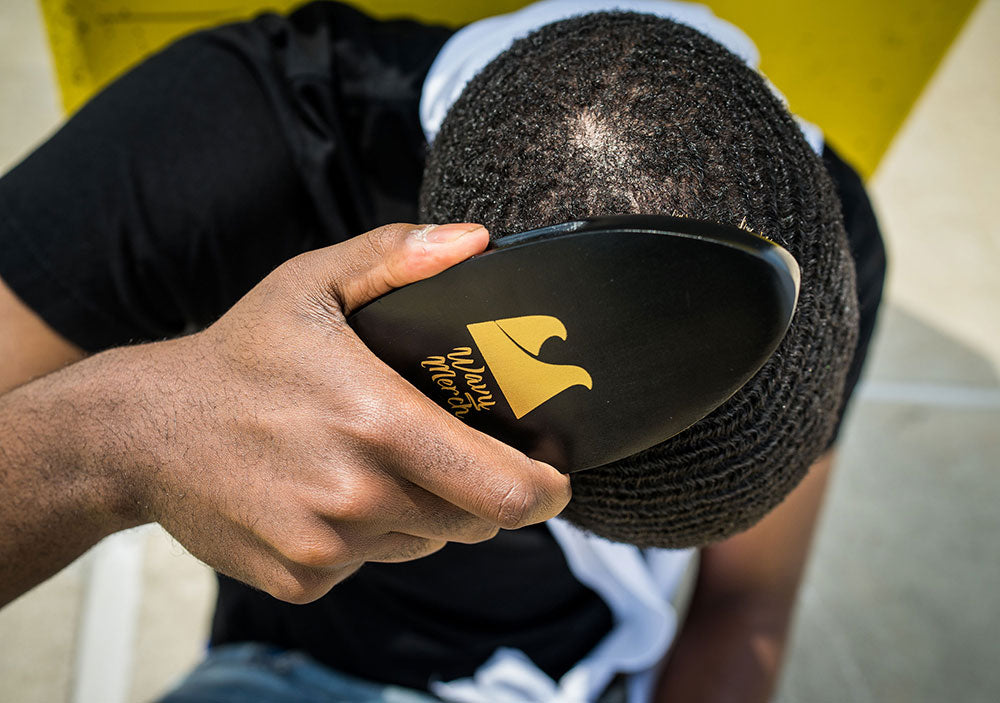
- Brush immediately (soft or medium brush) A softer brush will help glide over your pattern, pulling your waves. You dont need a hard brush to penetrate your scalp, since your hair is much shorter now.
- Wash your hair. You will have loose hair on your scalp, and it will irritate your skin and scalp. Read this to learn how to wash your 360 waves without losing progress.
- After washing your hair, the nutrients and natural oils have been stripped. Use a light wave cream or moisturizer to replenish the nutrients in your hair, which will add shine, and make your waves pop.
- Increase brushing frequency the first week. Your hair is at its most vulnerable state when its low, so set the tone for your next wolfing session correctly by increasing your brushing.
This locks your pattern back in and enhances definition.
 Inferno Soft Brush
Spread the natural oils through your hair after a fresh cut with a soft brush for max shine.
🔗Shop Here
Common Mistakes That Ruin 360 Waves
Your wave cut is the make or break for your pattern and wave development. Avoid these at all costs:
- Cutting too low too early. Wait until your pattern is set before cutting close to your curl length.
- Cutting against the grain too short. You must use a higher guard when going against the grain. If you usually go 2 with the grain, dont go any lower than a 4 against the grain. I like to double my guard WTG/ATG
- Skipping brushing after a cut. Your waves are the most sensitive after a cut. Make sure you brush the most during this period to advance your wave development.
- Over-lining the hairline. This will slowly push your hairline back.
Consistency +safety > shortcuts.
🔥 Recommended Products for Fresh 360 Waves
Cutting your waves the right way sets the foundation — but keeping them laid and defined is what separates average waves from elite waves.
For best results after a cut, make sure you’re using:
- A durag that stays tight all night (prevents frizz & shifting)
- A brush matched to your wave stage
- A light, non-greasy wave cream to enhance definition
These three steps protect your cut and help your waves pop immediately after the barber.
Frequently Asked Questions About Cutting 360 Waves
Can you cut 360 waves too low?
Yes. Cutting waves too low can remove the wave pattern entirely, especially for beginners. Waves are laid down curls. If you cut too short, your hair wont be curly at that length, meaning you wont have waves.
Will cutting waves reset progress?
Only if done incorrectly. Cutting with the right guard will preserve your pattern, and potentially extend your wolf sessions.
Is it better to cut waves with clippers or scissors?
Clippers with a guard are best. They give you precision when determining the length of your hair. Scissors don’t work best for 360 waves because you cant cut everything evenly. 360 waves are a clean haircut style.
How soon should I brush after a cut?
Immediately — brushing right after a cut helps your waves connect. Using a softer brush is best at this length because you dont need a hard brush to reach your scalp. A softer brush will glide over your pattern, pulling your waves with each stroke.
Can beginners cut their own 360 waves?
It’s possible, but beginners should be cautious. A barber experienced with waves is recommended.
I started cutting my hair after 2 years of waving. It was one of the greatest skills ive learned. My hair stays fresh every week, I save money, and I havent had a barber ruin my 360 wave progress in years.
Final Tip
Cutting your waves correctly is only half the battle.
Protecting, moisturizing, and brushing consistently is what makes your waves pop after the cut.
If you’re serious about wave progress, make sure you’re using:
- A quality durag that protects and compresses your waves without cutting off airflow
- The right brush. Soft, Medium, and Hard brushes manipulate your waves at different hair lengths, so its recommended to have all 3.
- A non-greasy wave cream to nourish and assist in laying down your waves.
Your cut sets the foundation — your routine builds the results.
 Silk Durags
Select your favourite colour to save your 360 wave progress, while making a fashion statement.
🔗Shop Now


1 comment
Can u send me information about 360 waves?